

Medical imaging has always been technology-driven—but for years, that technology came with a heavy operational cost. On-premise PACS servers, dedicated workstations, backup systems, and constant IT oversight became an accepted part of running an imaging department.
Today, Cloud PACS are changing that equation.
By shifting storage, access, and system management to the cloud, imaging providers are significantly reducing IT burden while breaking free from an overreliance on physical hardware. The result is a more resilient, scalable, and future-ready imaging environment.

The Traditional PACS Challenge: Hardware Everywhere
Legacy PACS environments depend heavily on physical infrastructure:
- On-site servers that require maintenance, monitoring, and periodic replacement
- Local storage systems that must be expanded as imaging volumes grow
- Dedicated reading stations that limit where and how clinicians can work
- Complex backup and disaster recovery setups
All of this places a constant demand on internal IT teams—or expensive third-party support contracts. When hardware fails or software updates go wrong, imaging workflows can slow down or stop entirely.
In a clinical environment where uptime matters, this dependence on physical systems introduces unnecessary risk.
Cloud PACS Shift the Burden Away from IT
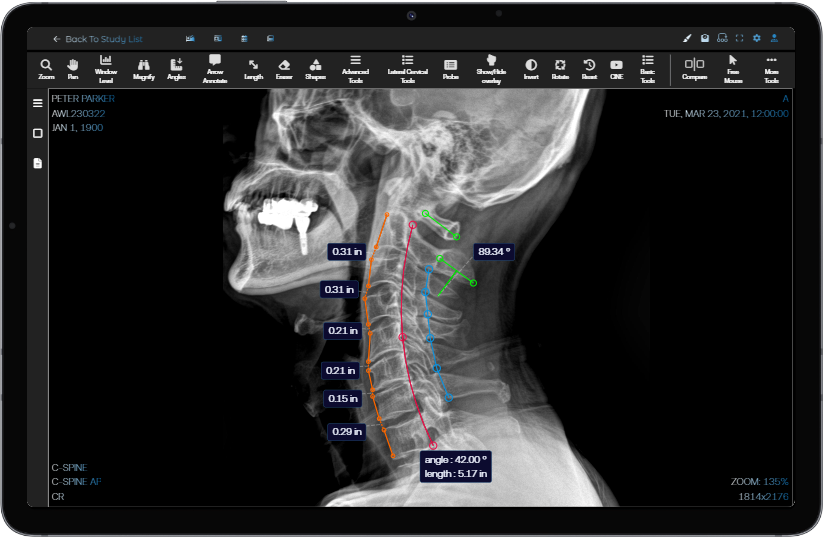
Cloud-based PACS dramatically simplify the technical foundation of medical imaging by moving core infrastructure off-site.
Instead of maintaining servers and storage locally, organizations rely on secure cloud platforms that handle:
- System updates and maintenance
- Storage expansion
- Redundancy and disaster recovery
- Performance optimization
This shift reduces the day-to-day workload for IT teams and allows them to focus on higher-value initiatives rather than keeping imaging systems running.
For smaller practices and outpatient centers, cloud PACS can eliminate the need for dedicated imaging IT expertise altogether.
Less Hardware, More Flexibility
One of the most immediate benefits of cloud PACS is the reduction in physical hardware requirements.
With cloud access:
- Images can be viewed securely through web browsers
- Clinicians are no longer tied to specific workstations
- Remote reading becomes easier and more reliable
- Facilities avoid repeated investments in high-end local systems
This flexibility supports modern care models, including teleradiology, multi-site operations, and hybrid work environments—all without adding complexity to the IT stack.
Built-In Resilience and Scalability
Hardware-dependent systems are vulnerable to outages, local disasters, and capacity limits. Cloud PACS are designed differently.
Cloud platforms typically offer:
- Redundant data storage across multiple locations
- Automatic failover and high availability
- Seamless scaling as imaging volume increases
This means imaging departments can grow without worrying about server capacity or costly infrastructure upgrades. Reliability becomes a built-in feature rather than an ongoing project.
Security Without the Local Overhead
Security is often cited as a concern with cloud solutions, but modern cloud PACS platforms are designed with healthcare compliance in mind.
By centralizing security management, cloud PACS providers handle:
- Regular security updates and patching
- Access controls and audit trails
- Encrypted data storage and transmission
This approach often exceeds what individual facilities can realistically maintain on their own, while reducing the local IT effort required to stay compliant.
A Strategic Shift, Not Just a Technical One
Moving to cloud PACS isn’t simply an IT upgrade—it’s a strategic decision.
By reducing dependence on physical hardware and easing IT burden, imaging organizations gain:
- Lower total cost of ownership
- Improved system reliability
- Greater operational agility
- Better support for modern clinical workflows
As imaging volumes grow and care delivery becomes more distributed, cloud PACS provide a foundation that scales with the future instead of anchoring organizations to the past.
The Bottom Line
Medical imaging shouldn’t be limited by server rooms, aging hardware, or constant IT firefighting.
Cloud PACS help imaging providers shift from maintaining infrastructure to delivering care—reducing complexity, improving resilience, and supporting a more flexible imaging ecosystem.
For organizations looking to modernize their imaging environment, the move to the cloud is no longer just an option—it’s a competitive advantage.